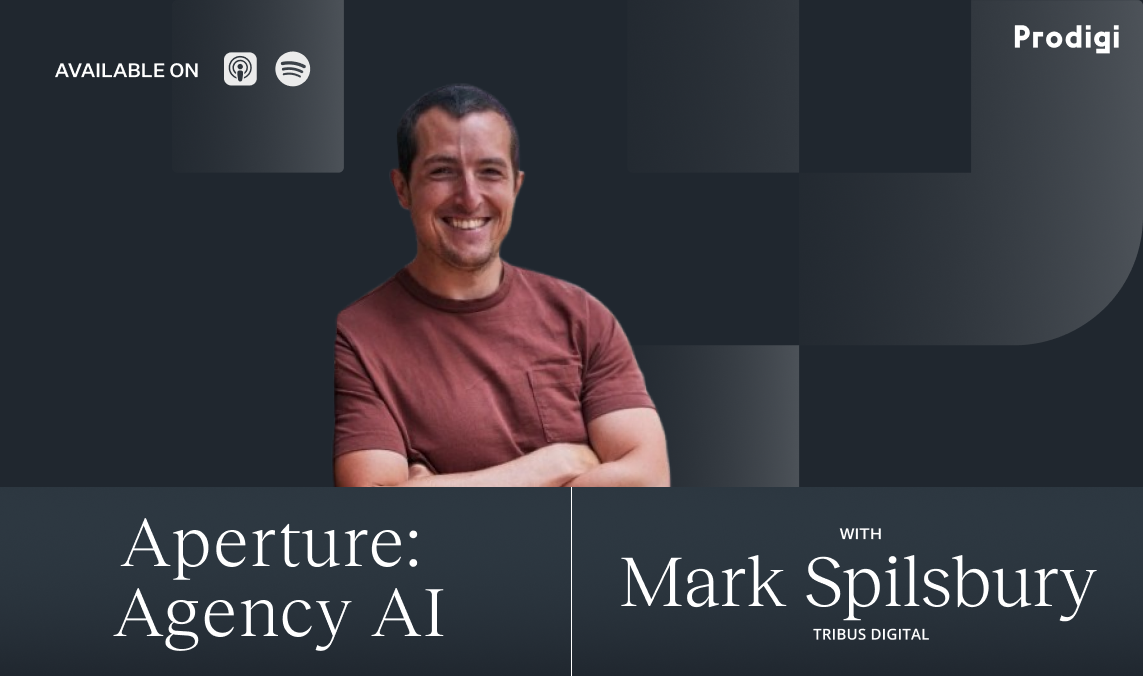
Mark Spilsbury was recently in the room when a client sat in on a call having already knocked together a working version of an idea in Claude, then asked if it had saved everyone time. What stayed with him wasn't the prototype. It was the sense that a problem he'd always treated as something to prepare for eventually had arrived instead.
“This is not a future thing we have to solve. This is something we have to solve, something that we need a solution for right now,” he says.
He reaches for an analogy he picked up elsewhere, not his own but one that stuck with him: AI-built front ends are like a theatre backdrop. “Everyone knows full well that if you walk the other side of that stage there's nothing to be seen, like there's nothing functionally done,” he says.
That gap between appearance and substance shows up in the numbers too. At Tribus Digital, a report page that would normally take half a day of design time got built from a screenshot in minutes. “That would have been half a day, maybe a day of design resource turnaround,” Mark says. “And we'd turn it around in 10 minutes.”
Inside the business, the trade-off gets sharper. Mark tells his team to accept work that would once have failed review. “You've got to accept that if an AI can do it in 10% of the time, but it's only... 70-80% as good as you think you were going to write it, that's OK,” he says. Refusing that trade, he argues, leaves an agency uncompetitive.
The harder problem is accountability. When a developer prompts code into existence rather than writing it, Mark has noticed something change. “I don't think they would feel responsible,” he says. “They wouldn't feel the same level of ownership they would if they wrote it.” Quality control gets murkier as a result, and documentation has to fill the gap that memory used to cover.
Mark is clear-eyed about the risk of token costs rising sharply, but he isn't planning around it. “I think if you base your business on AI failing, you're in the 1%,” he says.
Listen to the full conversation with Mark Spilsbury on Aperture: Agency AI.